
The demolition of one of the area’s long-standing pubs is now underway, bringing the curtain down on centuries of hospitality at Weyhill and serving as another stark reminder that when it comes to Britain’s pubs, the message is increasingly simple: use them or lose them.
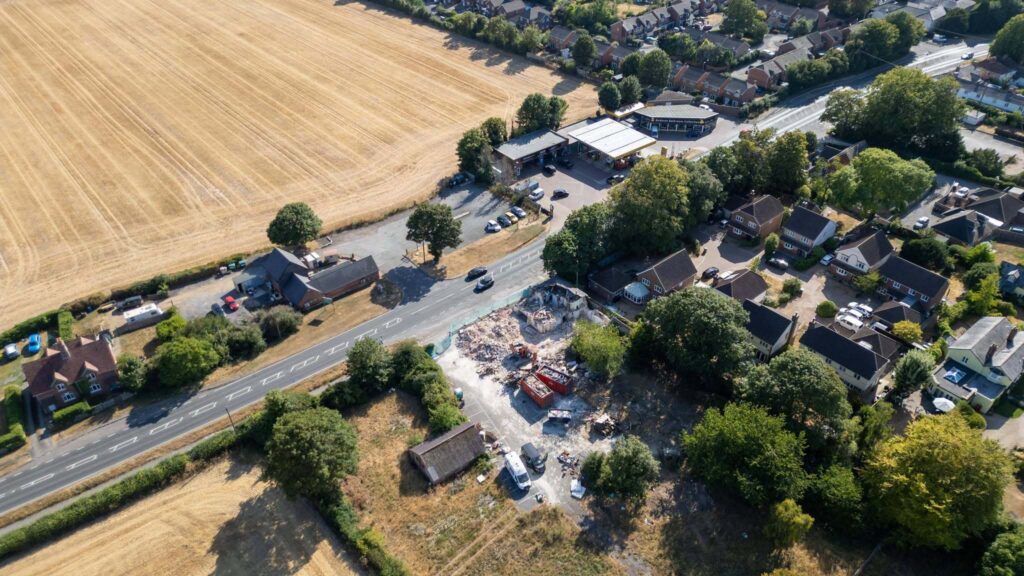
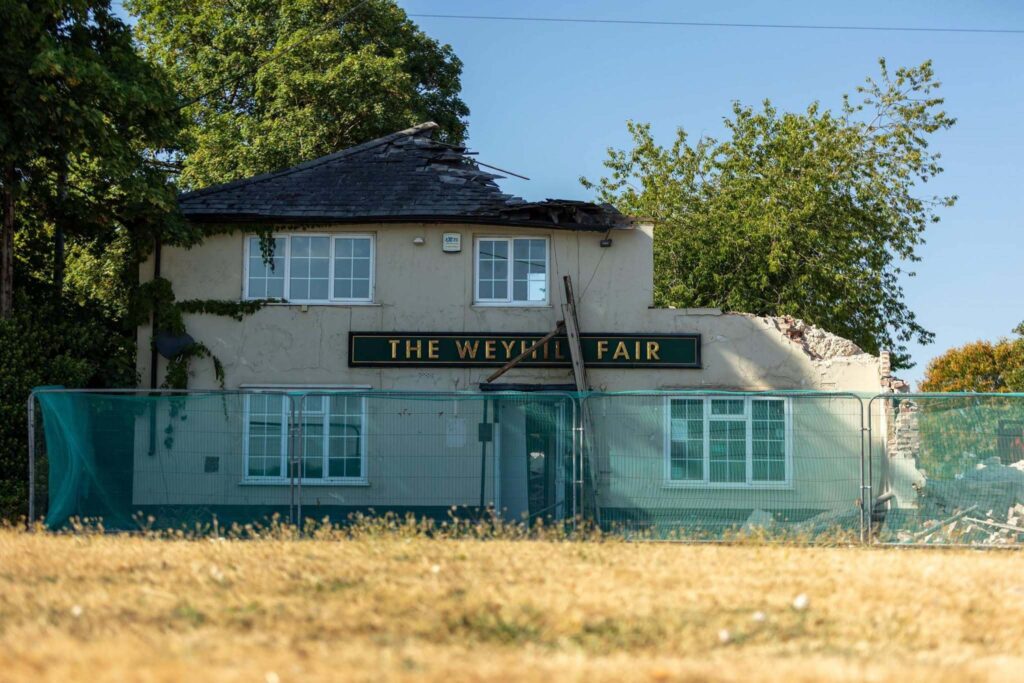
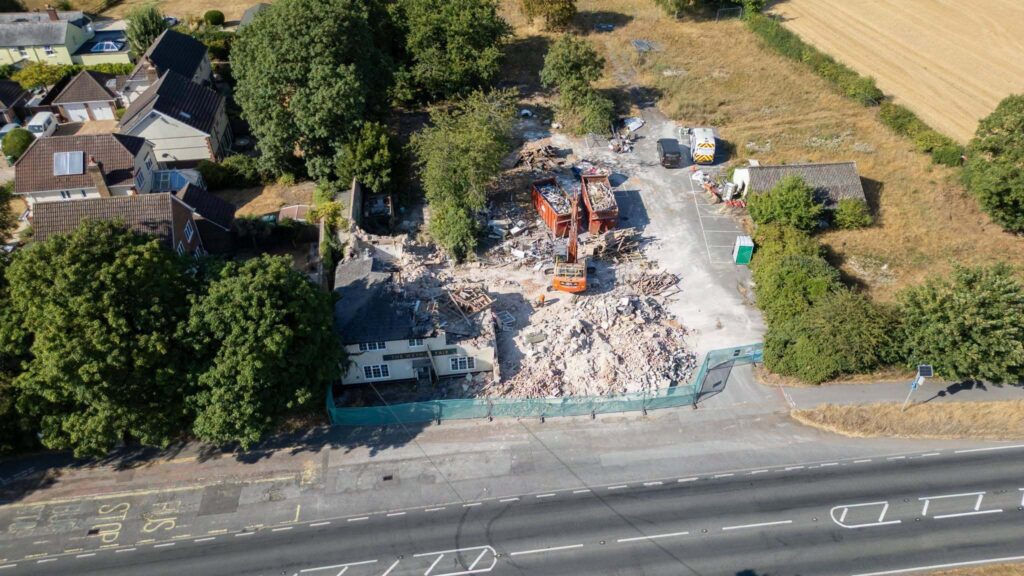
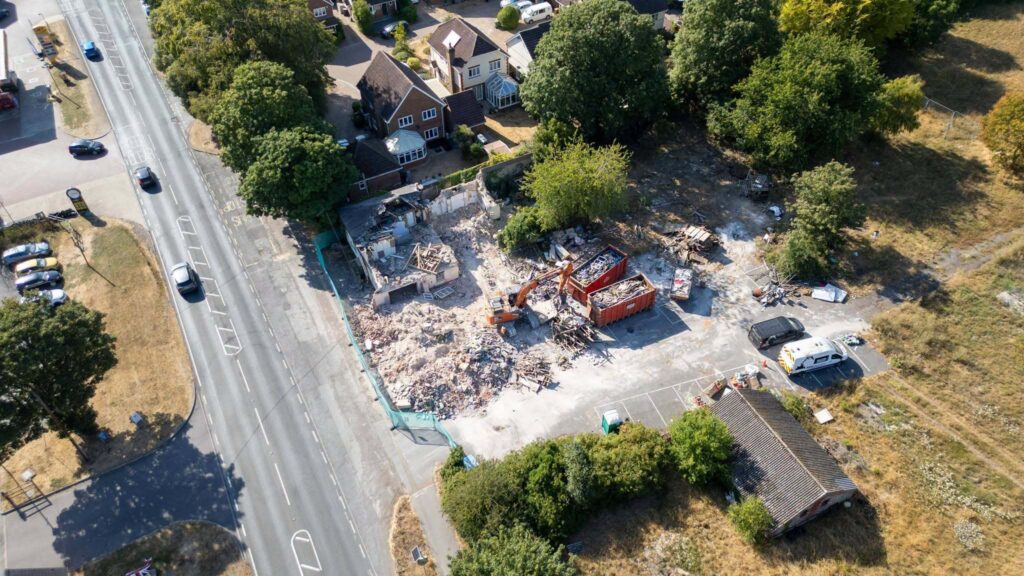
Work has begun to clear the former Weyhill Fair pub, which closed its doors in January 2023.
Planning permission has been granted for Rivendale Developments to build nine new homes on the site, with the developer proposing a rural, farmyard-style scheme arranged around a central courtyard.
The first homes are expected to be ready by early summer 2027.
For those passing the site today, however, the demolition represents considerably more than the loss of an old building.
It is the disappearance of another pub from the local landscape – a place where generations met friends, celebrated birthdays, raised a glass, enjoyed Sunday lunches, attended beer festivals and simply sat around a table putting the world to rights.
Centuries of history come to an end
The Weyhill Fair was formerly known as The Sun Inn and had served the area as a public house since at least the 19th century, with the building itself dating back to the 18th century.
Its location was particularly significant.
The pub stood alongside the historic Weyhill Fair site, associated with fairs stretching back centuries and once home to one of England’s major sheep and livestock markets.
For generations, Weyhill was a destination for farmers, drovers, traders and visitors, and inns were an important part of that tradition – providing food, drink, accommodation and somewhere to conduct business.
The Sun Inn was eventually renamed The Weyhill Fair in 1982, linking the pub even more closely with the area’s history.
In more recent times, many local people will remember the Weyhill Fair for its food, its traditional country pub atmosphere and particularly its annual beer festivals, which brought people together for live entertainment, real ale and a celebration of pub culture.
Those memories will remain, but the pub itself will not.
No operator came forward
The uncomfortable reality is that pubs cannot survive on nostalgia alone.
The Weyhill Fair closed following poor financial performance and, according to documents submitted as part of the planning process, efforts were made to market the premises to pub operators.
No offers were received which would have kept the site operating as a public house.
That is an important part of the story.
It is easy to mourn a pub when the demolition machinery arrives. It is much harder to notice that a pub is disappearing when the signs are less dramatic – an empty table on a Friday night, another quiet lunchtime, fewer people ordering a pint or another weekend when customers decide to stay at home.
By the time the doors are locked for the final time, it can already be too late.
Use it or lose it
The loss of the Weyhill Fair should therefore serve as a reminder to communities across Andover and the surrounding villages.
If people value their local pub, they have to use it.
That does not mean everyone needs to spend every evening at the bar. Supporting a pub can mean popping in for a coffee, having Sunday lunch, meeting friends for a drink, attending a quiz night, watching live music, choosing the local for a birthday meal or simply stopping for one pint rather than automatically heading home.
Britain’s pubs are more than places which sell alcohol.
At their best, they are meeting places. They are where newcomers to villages meet their neighbours, local clubs gather, charity events are held, musicians get their first gigs and friendships are made.
In rural communities in particular, the village pub can be one of the last remaining places where people of different ages and backgrounds regularly share the same room.
But sentiment does not pay the electricity bill, staff wages, business rates or the cost of keeping the cellar stocked.
A pub needs customers.
There will inevitably be debate whenever a historic pub disappears and homes take its place, but the story of the Weyhill Fair demonstrates why protecting pub culture cannot begin when a planning application lands on somebody’s desk.
It begins while the pub is still open.
It begins with walking through the door.
Nine new homes will now mark the next chapter for this particular corner of Weyhill, and new families will eventually make their own memories there.
But something which existed for generations has gone with it.
Across Andover and its surrounding villages there are still independent pubs, traditional inns and community locals serving customers every day. Some will be busy. Others will quietly be fighting rising costs and changing habits while hoping enough people continue to come through their doors.
So perhaps the sight of the Weyhill Fair being demolished should prompt one simple thought.
If there is a local pub people would genuinely miss if it disappeared, don’t wait until the bulldozers arrive to say how much it meant to the community.
Go and use it while it is still there.